WooCommerce vs Shopify: The Honest 2026 Comparison
Compare WooCommerce vs Shopify based on costs, flexibility, scalability, and business needs. Find the right e-commerce platform in 2026.
Choosing an e-commerce platform is only the first decision. The bigger challenge is understanding how WooCommerce and Shopify perform when your business grows, your requirements become more complex, and your operational needs change. Shopify focuses on simplicity, managed infrastructure, and fast setup, while WooCommerce focuses on ownership, flexibility, and customization. The right choice depends on your store requirements, technical resources, growth plans, and long-term goals. We will clearly and honestly explain what WooCommerce and Shopify do better and who should use each platform.
This article updates and consolidates prior WooCommerce vs. Shopify comparisons to provide the latest platform facts and price specifics. All Shopify pricing information in this guide was checked against Shopify’s official pricing page in July 2026.
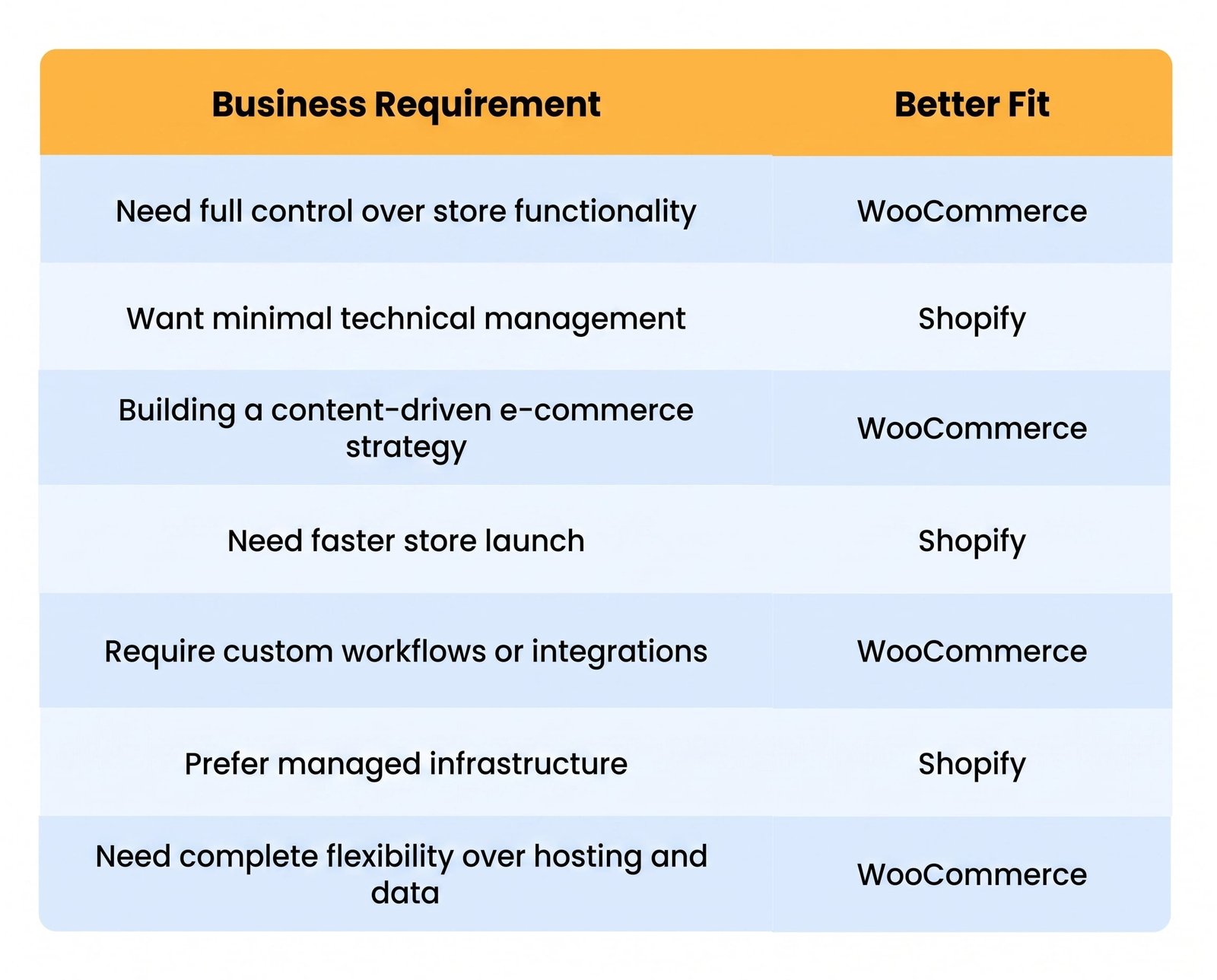
How WooCommerce and Shopify Affect Your Business Long-Term
Choosing between WooCommerce and Shopify is not only about comparing features. The better choice depends on how your e-commerce business operates today and what you need as your store grows.
WooCommerce gives businesses more control over the structure of their store, their customer data, integrations, and customization choices. This versatility is especially useful for stores with unique needs, complex workflows, or plans for extensive customization. But that control also entails handling things like hosting, upgrades, security, and constant optimization. If you want additional functionality, you can look for WooCommerce customization services to enhance your store’s features.
Shopify does things differently by eliminating technical management. The platform offers hosting, infrastructure, security upgrades, and core maintenance so merchants can focus more on products and operations. That simplicity is good for businesses looking for a managed e-commerce solution, but it does mean you’re working within the Shopify platform’s structure and its accessible customization options. If a firm is considering a shift between platforms, WooCommerce migration services can assist in planning and managing the transition process.
How e-commerce Platform Costs Change as Your Business Grows
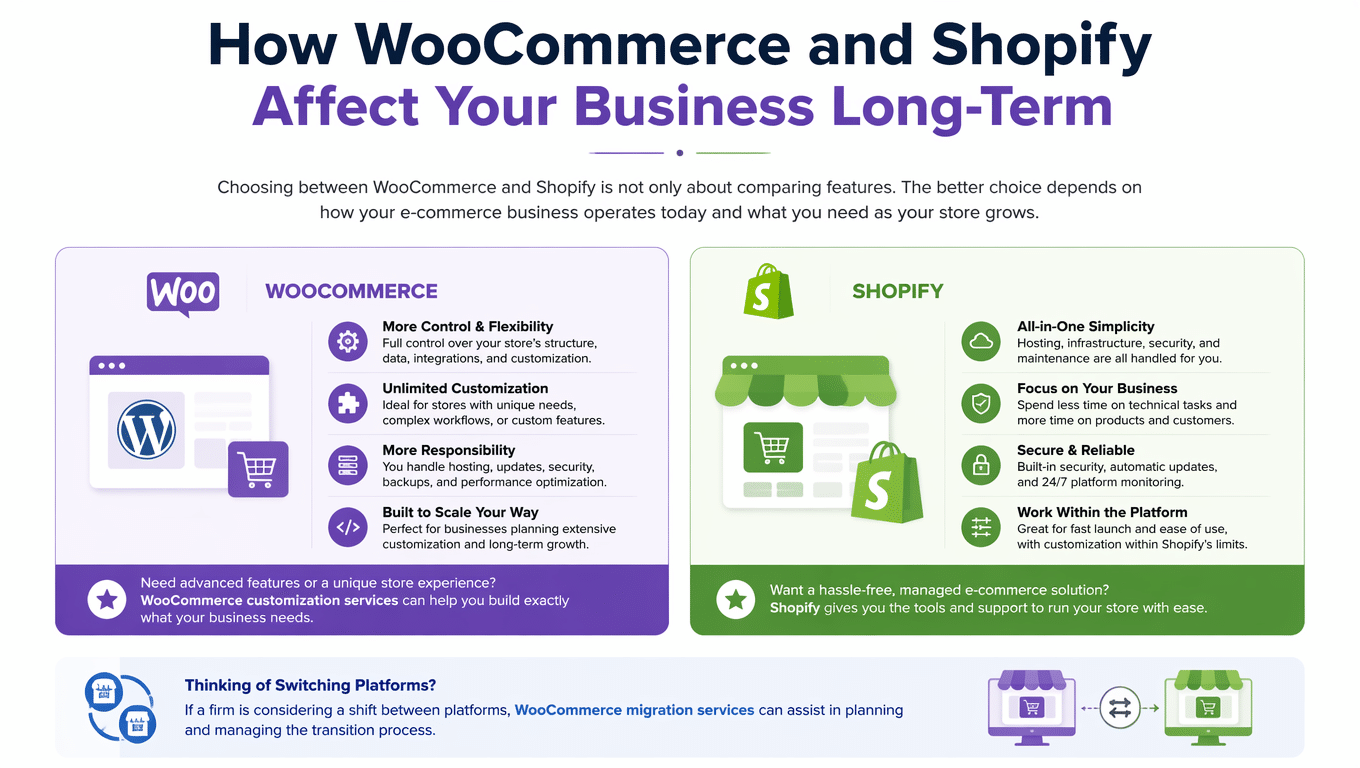
The starting monthly price is one of the factors to consider when choosing an e-commerce platform, but it can be a misleading metric. The real cost depends on your revenue, payment setup, required features, and how much technical support your store needs.
Typically, Shopify costs increase as stores require more features, better reporting, additional staff accounts, or advanced functionality. Businesses using third-party payment providers should also consider additional transaction fees, especially as order volume increases.
WooCommerce follows a different cost model. The platform itself does not charge transaction fees, but merchants are responsible for choosing and managing services such as hosting, extensions, security, and maintenance. This gives store owners more flexibility over where they allocate their budget.
As a WooCommerce store grows, managing hosting, updates, security, and performance becomes an important operational consideration. Businesses that prefer ongoing technical support can use WooCommerce maintenance plans to manage updates, monitoring, and store stability.
The right platform depends on whether your business prefers predictable managed costs or greater control over individual e-commerce expenses.
Example: How Costs Change at Different Growth Stages
Early-stage store
Priority:
- Launching quickly
- Testing products
- Keeping setup simple
Shopify may be attractive because it handles infrastructure management for you.
Growing store
Priority:
- More customization
- Better workflows
- More integrations
WooCommerce may provide more flexibility because businesses can choose their hosting, plugins, and development approach.
Established store
Priority:
- Performance
- Custom features
- Operational efficiency
The best platform depends on whether the business values platform control or managed simplicity.
Which Platform Fits Different Business Needs?
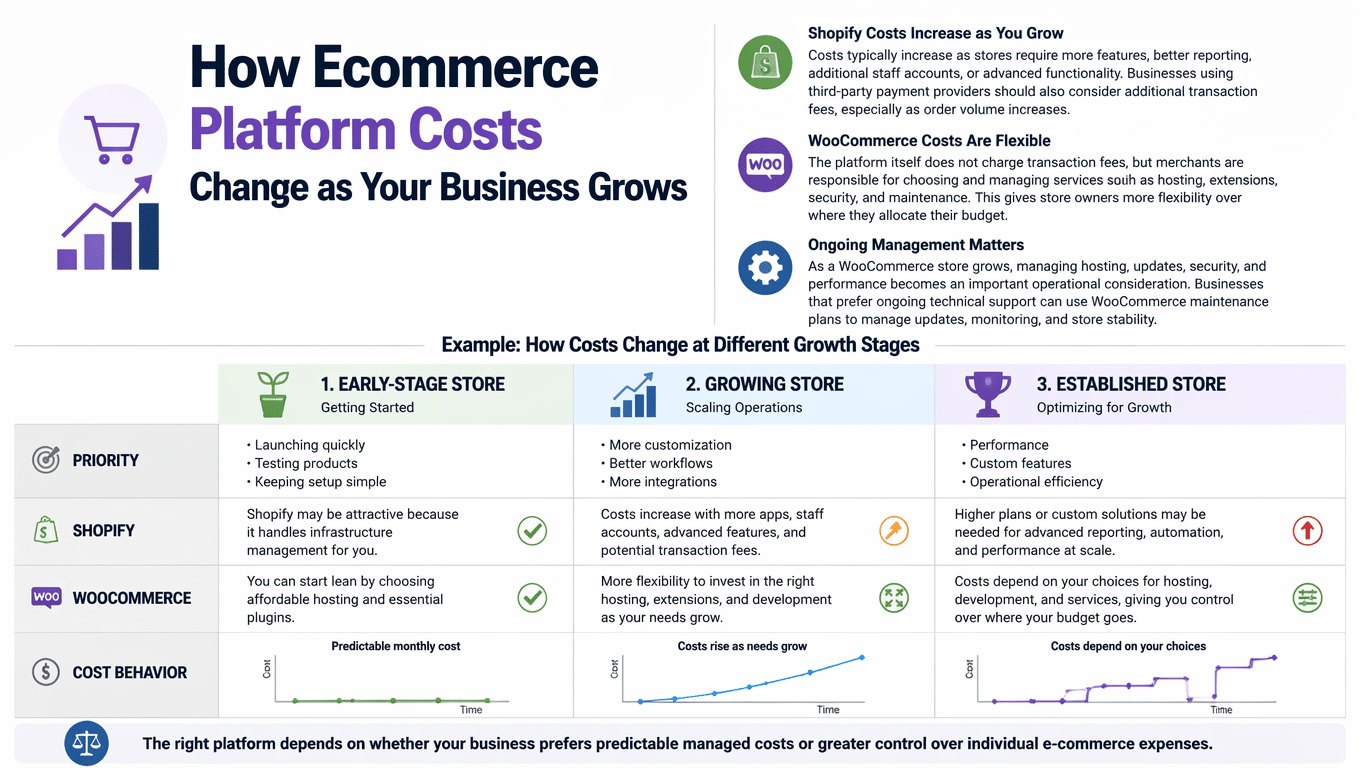
You can build a successful online business with both WooCommerce and Shopify, yet they are built around different operational models. Rather than asking which platform is superior overall, businesses should analyze which one works best for their current needs and future ambitions.
How Platform Choice Changes as Your Business Grows
New Store
A new e-commerce business may be more worried about speed, simplicity, and testing products. Shopify can be a good choice because the platform takes care of the technical setup and infrastructure management.
Growing Store
As a business matures, the requirements generally become more complex. WooCommerce may be a better choice if you need custom integrations, advanced product options, unique checkout experiences, and automation demands.
Established Store
Established businesses are usually concerned with performance, operational efficiency, and long-term flexibility. Which platform is preferable depends on whether the business wants greater control or prefers a managed e-commerce environment.
Looking for a Ready-Made Solution?
Explore our WordPress, WooCommerce, and LMS plugins built to extend functionality without custom development.
When WooCommerce May Be the Better Fit
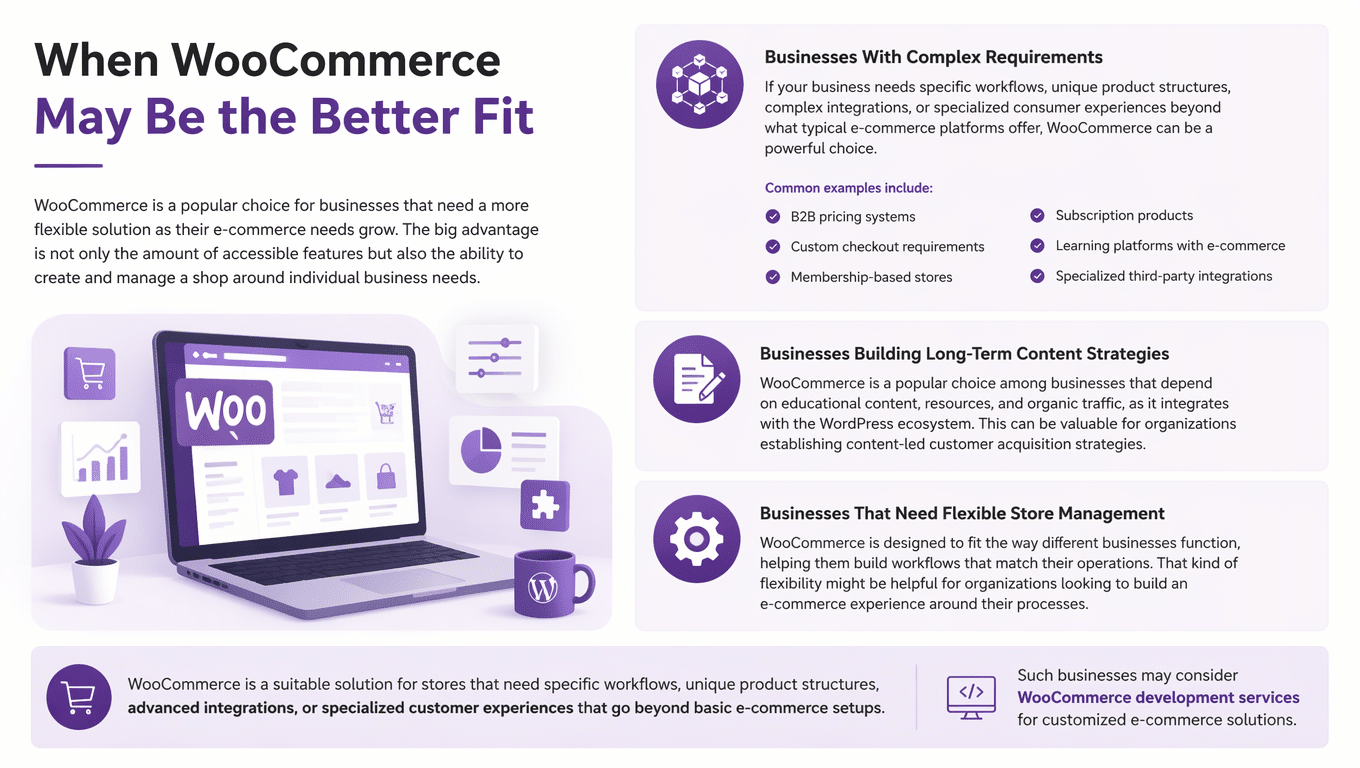
WooCommerce is a popular choice for businesses that need a more flexible solution as their e-commerce needs grow. The big advantage is not only the amount of accessible features but also the ability to create and manage a shop around individual business needs.
Businesses With Complex Requirements
If your business needs specific workflows, unique product structures, complex integrations, or specialized consumer experiences beyond what typical e-commerce platforms offer, WooCommerce can be a powerful choice.
Common examples include:
- B2B pricing systems
- Custom checkout requirements
- Membership-based stores
- Subscription products
- Learning platforms with e-commerce
- Specialized third-party integrations
Businesses Building Long-Term Content Strategies
WooCommerce is a popular choice among businesses that depend on educational content, resources, and organic traffic, as it integrates with the WordPress ecosystem. This can be valuable for organizations establishing content-led customer acquisition strategies.
Businesses That Need Flexible Store Management
WooCommerce is designed to fit the way different businesses function, helping them build workflows that match their operations. That kind of flexibility might be helpful for organizations looking to build an e-commerce experience around their processes.
WooCommerce is a suitable solution for stores that need specific workflows, unique product structures, advanced integrations, or specialized customer experiences that go beyond basic e-commerce setups. Such businesses may consider WooCommerce development services for customized e-commerce solutions.
When Shopify May Be the Better Fit
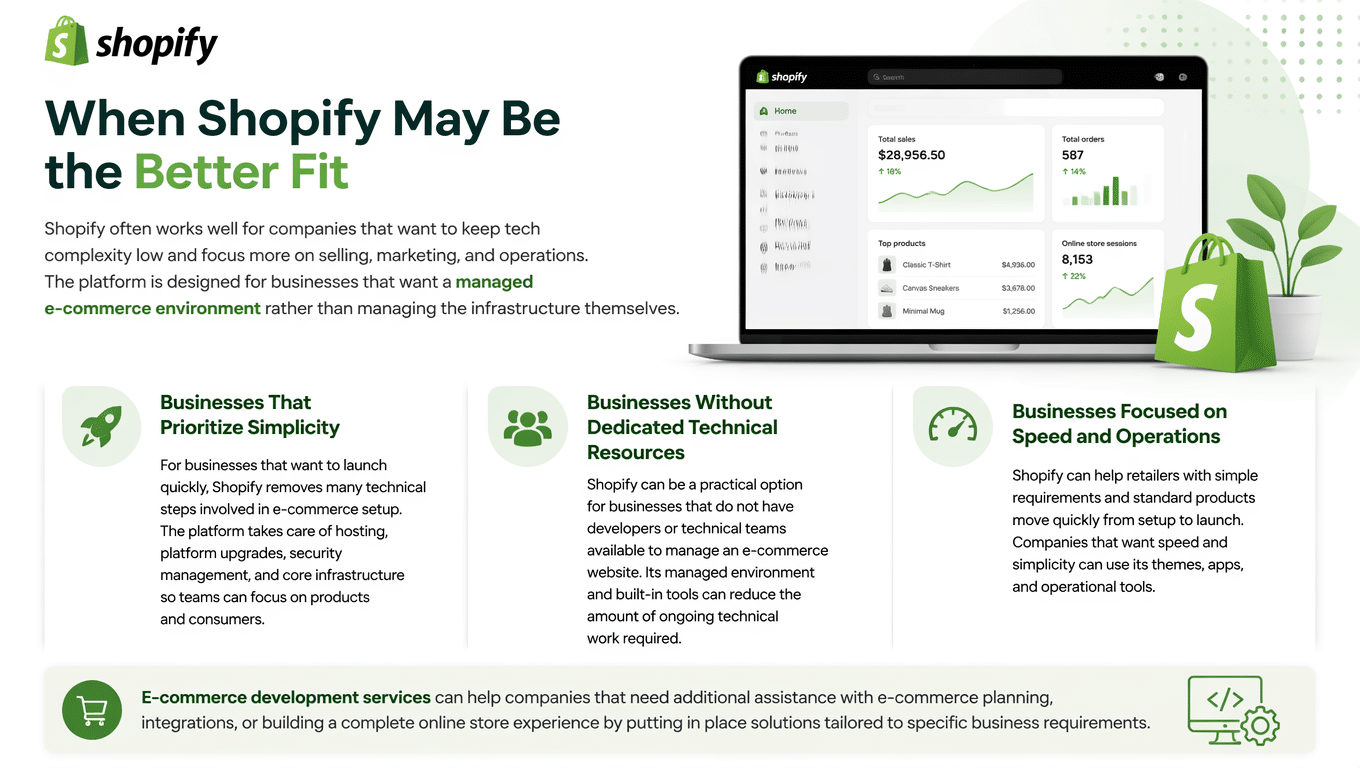
Shopify often works well for companies that want to keep tech complexity low and focus more on selling, marketing, and operations. The platform is designed for businesses that want a managed e-commerce environment rather than managing the infrastructure themselves.
Businesses That Prioritize Simplicity
For businesses that want to launch quickly, Shopify removes many technical steps involved in e-commerce setup. The platform takes care of hosting, platform upgrades, security management, and core infrastructure so teams can focus on products and consumers.
Businesses Without Dedicated Technical Resources
Shopify can be a practical option for businesses that do not have developers or technical teams available to manage an e-commerce website. Its managed environment and built-in tools can reduce the amount of ongoing technical work required.
Businesses Focused on Speed and Operations
Shopify can help retailers with simple requirements and standard products move quickly from setup to launch. Companies that want speed and simplicity can use its themes, apps, and operational tools.
If you’re planning to customize your Shopify store beyond standard themes or need help with custom apps, integrations, performance optimization, migrations, or ongoing maintenance, TheShopNinjas can help. Our team specializes in Shopify development, store customization, and technical solutions that help businesses build faster, more scalable online stores.
| WooCommerce is our platform. We have built 700+ stores on it, and we know what makes the difference.If you are leaning toward WooCommerce, WooNinjas can build your store, migrate an existing store from another platform, or take over the maintenance of a store you already run. Our WooCommerce maintenance plans handle plugin updates, security, backup verification, and checkout testing on a monthly schedule, so you can run the store instead of managing the infrastructure. |
Scaling Your E-commerce Business
Platform requirements often alter as an e-commerce site grows. Businesses should examine performance, integrations, operational efficiency, and the amount of control they want to have over the store.
For businesses who need custom workflows, advanced integrations, or more control over their e-commerce setup, WooCommerce is an option. Shopify’s managed platform experience streamlines store management and lowers technical complexity.
If you require extensive store functionality for your business, you can explore WooCommerce development services for custom e-commerce solutions and integrations.
Conclusion
WooCommerce or Shopify? It depends on your business’s goals, how you want it to grow, and your technical needs. Shopify is good if you want simplicity and controlled infrastructure; WooCommerce is good if you want flexibility and control, and Squarespace is good if you want something in between.
This guide explored how both platforms perform across different business situations, including store growth, operational requirements, customization needs, and long-term platform decisions. The best choice is the one that aligns with your e-commerce strategy.
WooNinjas offers WooCommerce maintenance plans for upgrades, monitoring, and shop performance. Our team has worked on 700+ WooCommerce projects and we help companies to keep their e-commerce stores reliable. Shopify is our platform too. Whether you need a brand-new Shopify store, custom theme development, private or public app development, third-party integrations, performance optimization, or ongoing technical support, TheShopNinjas can help. We build Shopify stores that are fast, scalable, and tailored to your business requirements.
| WooCommerce chosen? Let’s build your store. Need help making your WooCommerce idea a reality? WooNinjas can support your next step with WooCommerce services, including new store builds, platform changes through WooCommerce migration, and faster launches with WooCommerce quick launch. Tell us about your project, and Contact our WooCommerce experts; they will help you choose the right approach for your store. |
Frequently Asked Questions
Is WooCommerce really free compared to Shopify?
WooCommerce is free to install, but maintaining your store will cost you money for things like hosting, registering a domain, security, extensions, and optional development support. Shopify has a subscription-based strategy that covers hosting and platform administration. The entire cost depends on your store needs, your payment structure, and how much control you want.
Can I migrate my store to Shopify?
Yes, businesses may migrate their e-commerce store to Shopify from other e-commerce solutions such as WooCommerce, Magento, etc. The process usually involves moving products, customer data, orders, and store settings, making sure to handle SEO elements such as redirects properly. If you’re a business considering migrating to Shopify, you can get skilled migration support to minimize downtime and technical concerns.
What are Shopify’s current plan prices in 2026?
Shopify offers various pricing plans for businesses of all sizes, including Basic, Grow, Advanced, and Plus. Pricing varies by country, billing cycle, and selected features. When you compare Shopify pricing, also factor in the other costs such as apps, payment processing fees, and third-party transaction fees.
Can I migrate from Shopify to WooCommerce?
Yes, you can migrate your Shopify store to WooCommerce by transferring products, customer data, orders, and other important store data. Shopify Migration is often a complicated process, especially for larger stores with complex requirements, and usually requires proper data mapping, SEO redirect planning, and testing to make sure everything works correctly.
Does WooCommerce require technical knowledge?
WooCommerce requires more hands-on management than Shopify because businesses are responsible for areas such as hosting, updates, plugins, security and performance. Smaller stores can handle WooCommerce with basic knowledge, whereas larger stores might find it advantageous to have professional support to ensure reliability and security.
Which platform is better for SEO?
WooCommerce and Shopify have SEO features, but they have different levels of flexibility. WooCommerce is a part of the WordPress ecosystem, which means businesses have more control over the way content is published, the site layout, and the technical SEO settings. Shopify has great e-commerce SEO capabilities that are good for product-based stores, especially if you don’t need advanced content customization.
Need Ongoing WordPress Maintenance & Support?
We handle updates, performance monitoring, security hardening, and technical fixes so your WordPress and WooCommerce site stays stable and secure.
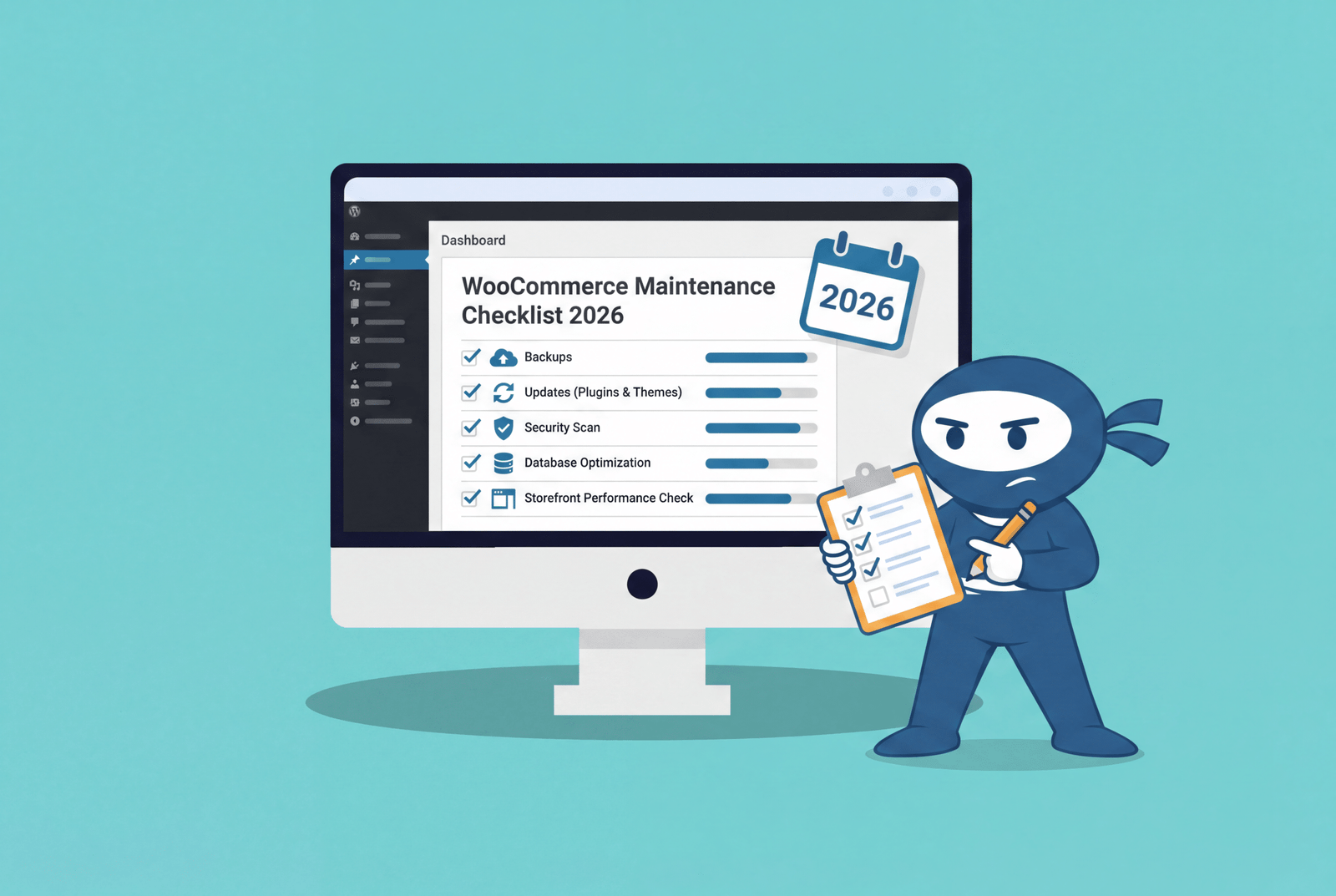
The WooCommerce Maintenance Checklist: Everything You Need to Do in 2026
The complete WooCommerce maintenance checklist for 2026. Backups, updates, security, speed, and storefront tasks with a clear action plan.
Read More...
Can You Sell Services on WooCommerce? A 2026 Complete Guide
Learn how to sell services on WooCommerce with this easy guide. Start selling consultations and digital services today.
Read More...
How to Build a Full-Featured B2B WooCommerce Store (2026 Guide)
Learn how to build a B2B WooCommerce store with wholesale pricing, customer roles, quote requests, and a step-by-step setup guide…
Read More...
